

Let’s talk about the most expensive conflict in talent acquisition that few people mention on LinkedIn. It’s not candidates ghosting interviews.It’s not AI-generated resumes. It’s not about skills shortages.
It’s the quiet tug-of-war happening every day between recruiters and hiring managers. The recruiter wants to fill the role. The hiring manager wants to make the perfect hire.
Both are intelligent. Both are well-intentioned. Both are measured on different outcomes. And both often leave hiring meetings wondering if the other person understands reality.
Sound familiar?
The Hidden Cost of Internal Hiring Friction
Recruiters live in the talent market. They know what candidates are available, what salaries are realistic, and which requirements are likely to turn away applicants.
Hiring managers live in the business. They know the problems that need solving, the pressure their team is under, the work to be done, and the consequences of making a bad hire.
Neither perspective is wrong. But when these perspectives collide, hiring slows down. The manager rejects candidates because they’re not “quite right.” The recruiter gets frustrated because the ideal candidate might not exist. The candidate sits in limbo.
And eventually everyone loses. Time-to-fill increases. Candidate experience deteriorates. Top talent accepts another offer. The hiring manager becomes more frustrated. The recruiter becomes more frustrated. Then someone schedules another calibration meeting.
Here’s the Question Nobody Asks
What if the disagreement isn’t really about hard skills? Think about it. When recruiters and hiring managers debate candidates, the conversation often sounds like it’s about experience, software proficiency, certifications, or industry knowledge.
But underneath those discussions is usually a deeper concern. Can this person succeed here? Can they learn? Can they adapt? Can they take feedback? Can they work with others? Can they communicate effectively? Can they handle ambiguity? Can they solve problems? Can they recover when things don’t go according to plan?
In other words:Can they demonstrate the human skills that determine long-term success?
The Great Hiring Consensus
Here’s what’s fascinating. Ask ten hiring managers what they want most in an early-career hire. You’ll get different answers. One wants Excel. Another wants HubSpot. Another wants Salesforce. Another wants Python. Another wants industry experience.
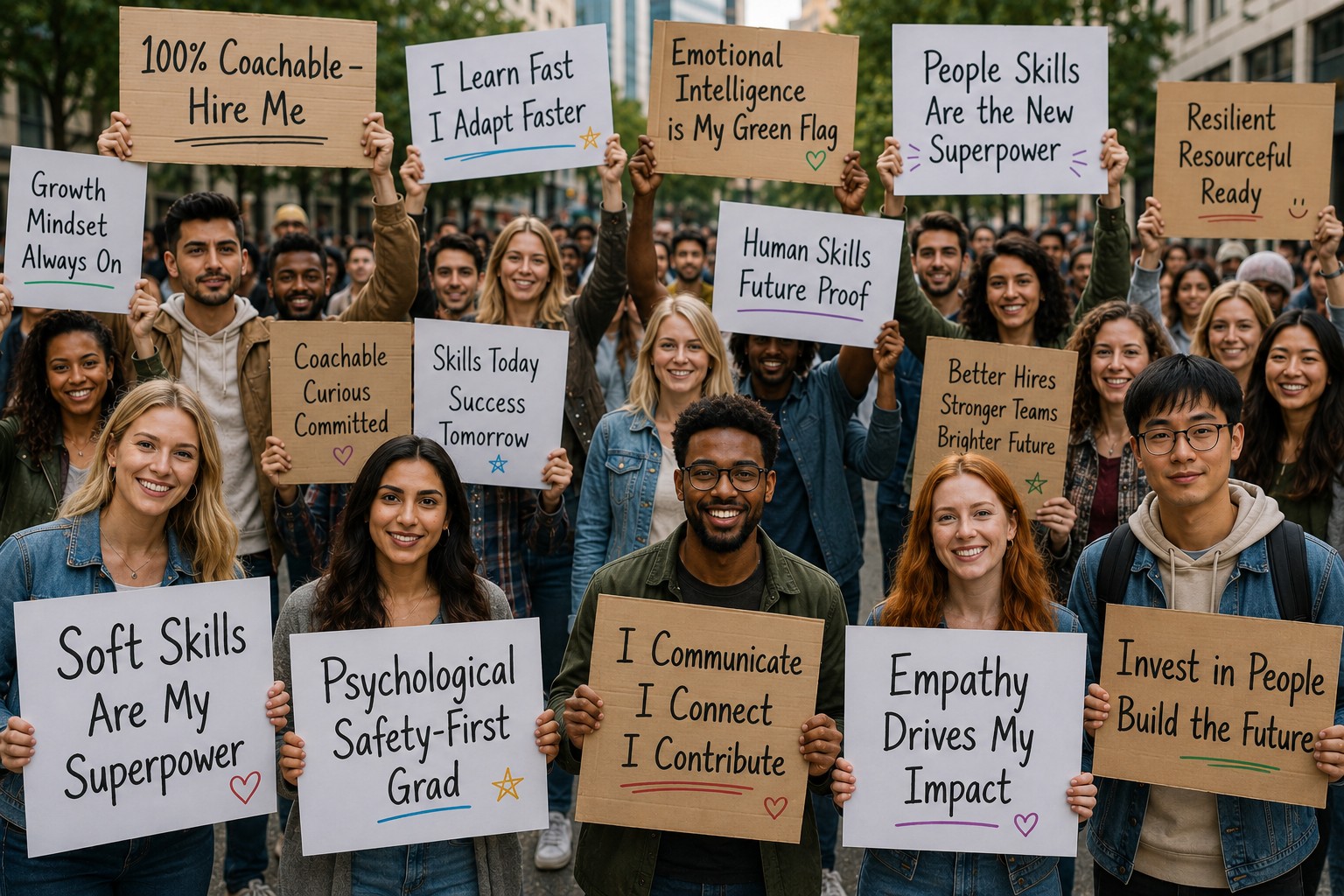
But ask those same ten hiring managers whether they want someone who is coachable. Or adaptable. Or emotionally intelligent. Or collaborative. Or willing to learn. Suddenly everybody agrees. That’s because soft skills are one of the few areas where recruiters and hiring managers naturally align.
In fact, multiple studies have shown that employers place enormous value on these skills, particularly for early-career talent. Many managers would rather hire someone with outstanding learnability and coachability than someone with a longer list of technical skills but a poor attitude toward growth.
Nobody has ever said:
- “I’d really prefer someone who resists feedback.”
- “Let’s hire the candidate who struggles to communicate.”
- “Give me the least adaptable person in the applicant pool.”
These are universal hiring priorities.
Why We Keep Hiring Backwards
Most hiring processes still begin by screening for hard skills. The irony? Hard skills are often the easiest thing to teach. Most organizations already have onboarding programs, SOPs, documentation, mentors, managers, LMS platforms, and technical training resources.
What they don’t have is a reliable way to teach someone to care. Or learn. Or collaborate. Or accept coaching. Or demonstrate emotional intelligence under pressure. Yet these capabilities tend to predict whether technical training succeeds in the first place.
A highly coachable employee can learn new software. A highly adaptable employee can learn a new process. A highly curious employee can acquire industry knowledge. A highly resilient employee can recover from mistakes.
But a technically skilled employee who refuses feedback creates a very different problem. Ask any manager who’s inherited one.
What If Development Started Before Hiring?
Here’s a more provocative idea: Most organizations view learning and development as something that begins after a candidate is hired. What if that’s too late? What if the top of the hiring funnel became the first stage of workforce development?
Instead of simply evaluating candidates, organizations could begin helping applicants develop the exact human skills required for success in the role.Not generic training. Targeted skill development tied directly to the position.
- Communication.
- Coachability.
- Problem solving.
- Emotional intelligence.
- Adaptability.
- Learnability.
Candidates gain value regardless of hiring outcome. Recruiters gain richer data than resumes alone. Hiring managers gain visibility into traits that predict long-term success. And suddenly the conversation shifts.
Instead of arguing over whether a candidate already possesses every technical skill, the discussion becomes: “Do they have the foundation to learn what they don’t know?” That’s a very different hiring conversation.
The KPI Nobody Talks About
Talent acquisition teams obsess over metrics like:
- Time-to-fill
- Cost-per-hire
- Source effectiveness
- Offer acceptance rate
Important metrics. But there’s another metric hiding underneath them. Internal hiring friction. Every disagreement over candidate quality. Every stalled decision. Every unrealistic requirement. Every rejected finalist. Every delayed feedback cycle. Those all create drag.
The more alignment recruiters and hiring managers have around what matters most, the faster hiring becomes.
Soft skills create that alignment. They provide a common language both sides can support. A recruiter can advocate for coachability. A hiring manager can advocate for coachability. A recruiter can champion learnability. A hiring manager can champion learnability. When both sides begin evaluating candidates through a shared lens, hiring moves faster. And better.
The Future Belongs to Soft Skills-First Hiring
As AI makes technical knowledge more accessible and easier to acquire, the differentiators increasingly become human. Not because hard skills don’t matter. They absolutely do. But because human skills determine how quickly people acquire hard skills, apply them, collaborate around them, and adapt when everything changes.
The organizations that recognize this early may discover an unexpected benefit: Not only do they improve the quality of hire. They reduce friction inside the hiring process itself.
And in a labor market where speed matters, alignment may be one of the biggest competitive advantages of all.
- The recruiter gets better candidates.
- The hiring manager gets better employees.
- The organization hires faster.
Everybody wins.
Resumes tell you what candidates have done. Human skills help predict what they'll become. TheRealMe helps employers identify workplace-ready talent through soft skills signaling, AI-powered insights, and workforce readiness development to improve candidate quality. We filter out disengaged applicants, reduce mis-hires, strengthen employer brands, and build retained teams that thrive in the age of AI. The future belongs to organizations that invest in human skills. We're here to help you get there. Schedule a demo today!