
The Soft-Skills-First Movement Is Coming, and It’s Going to Change Work Forever
For years, employers have been fighting the same battle.
“We can’t find qualified candidates.”
But that’s not actually the problem.
The real problem is that we’ve been looking for the wrong things.
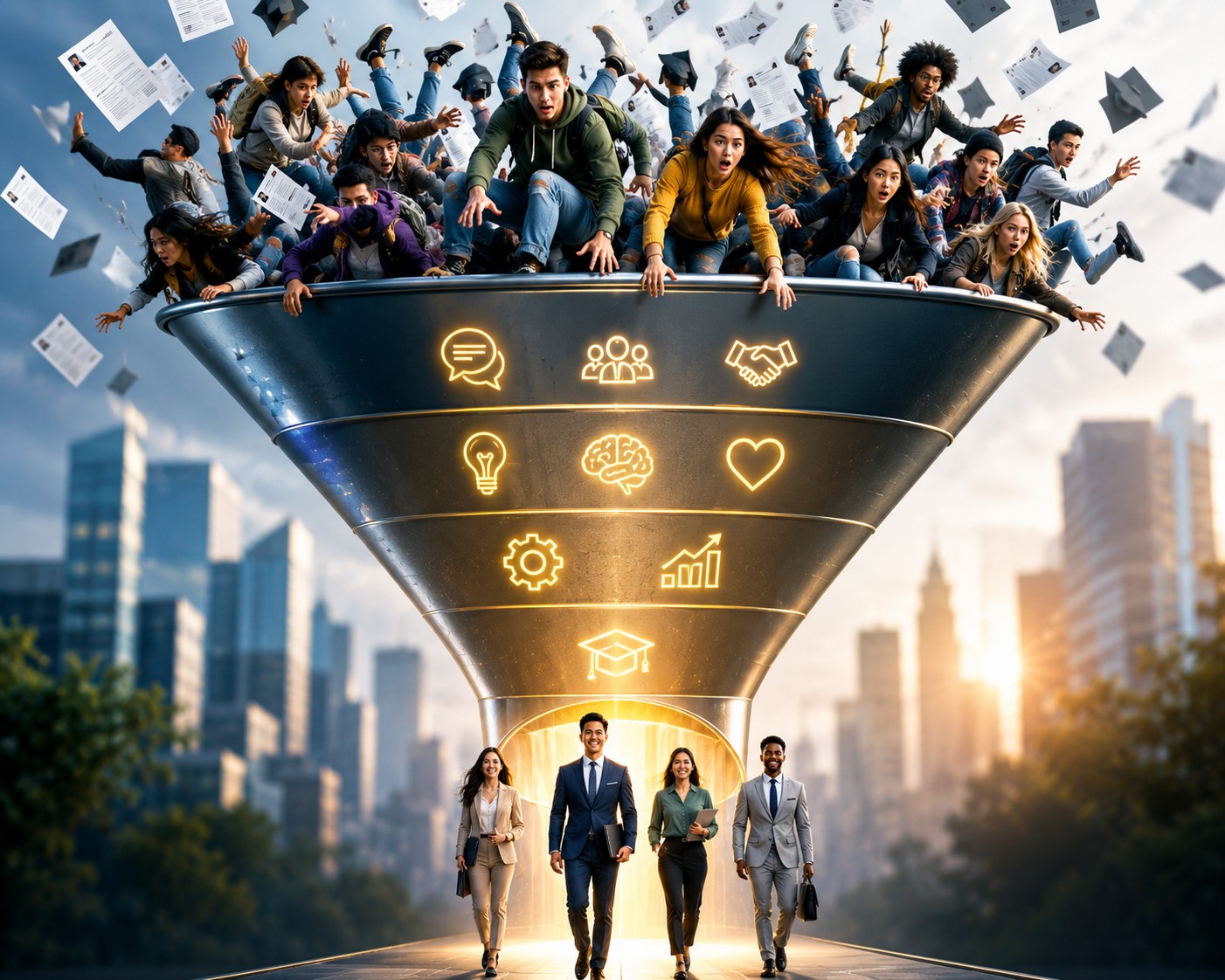
For decades, hiring systems have prioritized degrees, certifications, years of experience, and keyword matching. We built entire industries around screening for hard skills because they were easy to measure.
Then something interesting happened.
The world changed.
Technology accelerated. AI arrived. Job requirements evolved faster than job descriptions. Career paths became less predictable. Teams became more cross-functional. Working from home became normal.
And suddenly employers began noticing something:
The employees who thrive aren’t always the ones with the strongest technical skills.
They’re the ones with the strongest human skills.
Welcome to the Soft-Skills-First Movement.
What Is the Soft-Skills-First Movement?
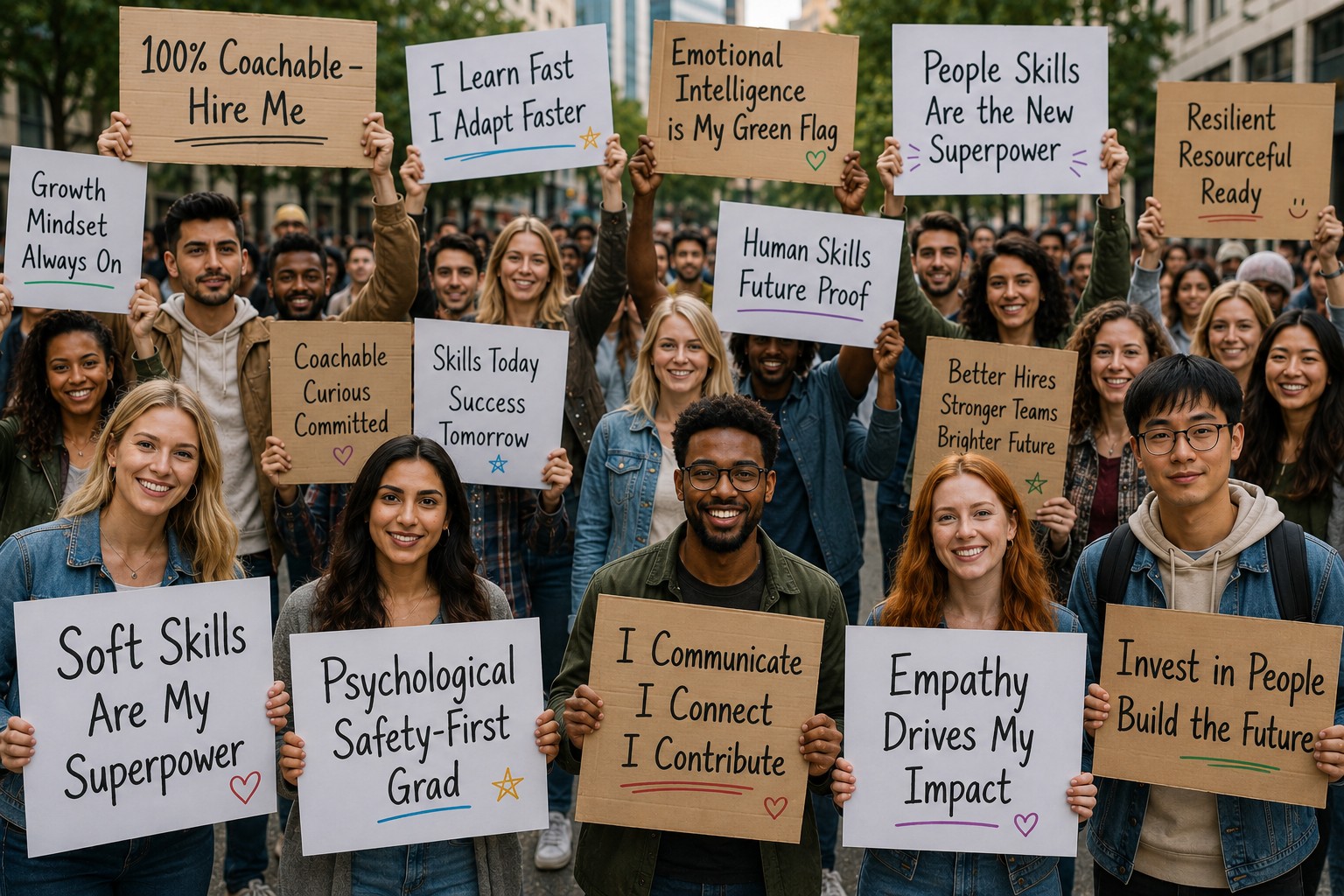
The Soft-Skills-First Movement is the growing recognition that foundational human capabilities—not technical skills alone—are becoming the primary predictors of long-term workplace success. This is especially true for early career candidates that have yet to develop these human skills for the workplace.
The “soft-skills-first” movement places soft skills at the absolute center of workplace culture. It integrates them into daily operations through targeted development, dedicated meetings, interactive games, and even themed employee swag. Ultimately, it ensures team members actively practice these interpersonal skills every single day.
Skills like:
-
Communication
-
Adaptability
-
Coachability
-
Emotional Intelligence
-
Collaboration
-
Critical Thinking
-
Curiosity
-
Resilience
-
Learnability
-
Problem Solving
These skills aren’t replacing technical skills.
They’re becoming the foundation that allows technical skills to remain valuable.
In a world where software changes, tools evolve, and AI can perform many technical tasks, the ability to learn, adapt, collaborate, and think critically becomes the true competitive advantage. This aligns with what employers consistently report: soft skills increasingly determine hiring success, performance, and retention.
How Did We Get Here?
Ironically, Gen Z may have accelerated this movement more than any generation before them.
Not because they lack talent.
Quite the opposite.
Gen Z entered the workforce during a period of unprecedented disruption:
-
COVID
-
Remote work
-
Economic uncertainty
-
AI transformation
-
Rising mental health awareness
-
Social media addiction
At the same time, many employers began reporting concerns around workplace readiness.
Not technical readiness.
Workplace readiness.
Hiring managers frequently described challenges around communication, feedback acceptance, resilience, professionalism, collaboration, and navigating workplace expectations.
In other words, readiness = soft skills.
The conversation became impossible to ignore.
Workforce organizations began discussing it.
Universities began discussing it.
Employers began discussing it.
And eventually, everyone started asking the same question:
“What if we’re screening for the wrong things?”
The AI Effect Nobody Is Talking About
Most conversations about AI focus on what humans will lose.
A more interesting question is:
What becomes more valuable because of AI?
History gives us a clue.
When calculators became common, mathematics didn’t disappear.
Higher-order thinking became more important.
The same thing is happening with AI.
As AI becomes better at generating content, analyzing data, writing code, and automating routine tasks, human value shifts upward.
Employers increasingly need people who can:
-
Ask better questions
-
Exercise judgment
-
Navigate ambiguity
-
Build trust
-
Influence others
-
Learn continuously
-
Adapt to change
AI can generate answers.
Humans still need to determine whether those answers should be trusted.
That’s a soft skill.
Why Employers Win
The Soft-Skills-First Movement benefits employers in ways many haven’t fully appreciated yet.
Better Hiring Decisions
Resumes tell you what someone has done.
Soft skills help predict what someone can do.
A candidate with average experience and exceptional coachability often outperforms someone with stronger credentials and poor coachability over time. Coachability, learnability, adaptability, and growth mindset are increasingly valuable because workplaces are changing so rapidly.
Improved Retention
Most organizations don’t lose employees because they forgot how to do their jobs.
They lose employees because of:
-
Poor communication
-
Weak leadership
-
Low resilience
-
Conflict
-
Lack of engagement
-
Inability to adapt
Those are soft-skill issues.
Future-Proof Talent
Technical skills expire.
Human skills compound.
An employee who knows how to learn can continuously acquire new technical skills throughout their career.
That’s a much safer investment.
Why Employees Win
This movement isn’t just good for employers.
It’s arguably even better for workers.
For years, people believed they needed:
-
The perfect degree
-
The perfect internship
-
The perfect resume
The Soft-Skills-First Movement changes the equation.
It recognizes that potential matters.
Growth matters.
Character matters.
A candidate who demonstrates curiosity, adaptability, resilience, and coachability can compete successfully even without a traditional background. There’s a reason some refer to soft skills as transferable skills.
That’s a powerful shift toward opportunity.
What Can You Do To Support The Movement?
Whether you’re an employer, recruiter, educator, workforce organization, or job seeker, you can help accelerate the shift.
If You’re An Employer
-
Stop treating soft skills as “nice to have.”
-
Measure them.
-
Assess them.
-
Develop them.
-
Reward them.
-
What gets measured gets managed.
-
Make them part of every day conversation among employees.
If You’re A Recruiter Or Talent Acquisition Leader
Move beyond resume keyword matching.
Start evaluating the human capabilities that predict long-term success.
The candidate who interviews slightly less polished but demonstrates exceptional coachability may be your future top performer.
If You’re A Manager
Every manager wants more coachable employees to manage to make life easier.
Treat soft skills like any other business capability.
You wouldn’t expect accounting skills to improve without training.
Why expect communication, resilience, or collaboration to improve without development?
If You’re A Job Seeker
Don’t just say you’re adaptable.
Prove it.
Don’t just claim you’re a strong communicator.
Demonstrate it.
The future belongs to candidates who can show evidence of these skills, not simply list them on a resume.
The Tidal Wave Is Already Here
Many workplace trends arrive slowly.
This isn’t one of them.
The shift toward human skills is being accelerated by AI, talent shortages, workplace complexity, and the growing realization that technical skills alone are no longer enough.
The organizations that recognize this early will hire better, retain more talent, and build stronger teams.
The candidates who embrace it will stand out in increasingly crowded applicant pools.
The future of work isn’t soft skills versus hard skills.
It’s soft skills first.
Because in a world where technology keeps changing, the most valuable thing you can hire is a human who knows how to adapt.
And that may be the most future-proof investment any organization can make.
Resumes tell you what candidates have done. Human skills help predict what they'll become. TheRealMe helps employers identify workplace-ready talent through soft skills signaling, AI-powered insights, and workforce readiness development to improve candidate quality. We filter out disengaged applicants, reduce mis-hires, strengthen employer brands, and build retained teams that thrive in the age of AI. The future belongs to organizations that invest in human skills. We're here to help you get there. Schedule a demo today!